Herniated Discs After a Car Accident: Causes, Symptoms & Treatment
Learn how car accidents cause herniated discs, the warning signs to watch for, and how physical therapy can help you recover without surgery.
Understanding Herniated Discs
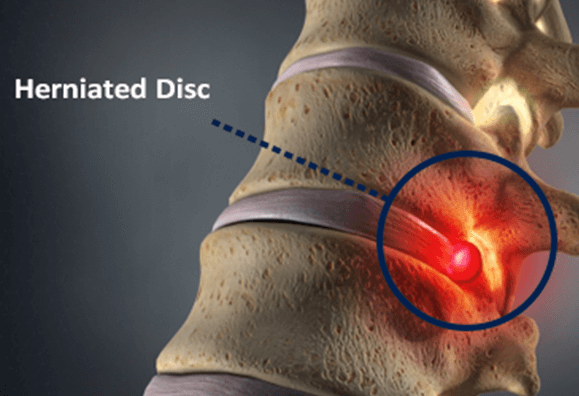
The spine is made up of individual vertebrae, cushioned by intervertebral discs that absorb shock and allow flexibility. Each disc has a tough outer layer (the annulus fibrosus) and a soft, gel-like center (the nucleus pulposus).
A herniated disc occurs when that inner gel pushes through a tear in the outer layer, irritating nearby nerves. Herniated discs are often confused with bulging discs, but the two are different: a bulging disc extends outward without tearing the outer layer, while a herniated disc involves an actual rupture — one that can compress nerves and lead to pain, tingling, or weakness.
How Car Accidents Cause Herniated Discs
Car accidents involve sudden, forceful movements the spine isn't built to absorb. Even a minor collision can generate enough force to damage a spinal disc. Common causes include:
Whiplash — Rapid back-and-forth head and neck movement that stresses the cervical (neck) discs.
Compression Injuries — Sudden pressure from a seatbelt or impact that affects the lumbar (lower back) discs.
Twisting or Bending — Unnatural spinal movement during a crash that increases the risk of disc rupture.
The neck and lower back are most commonly affected, though mid-back herniations can occur in higher-impact collisions.
Warning Signs of a Herniated Disc
Symptoms That Appear Right Away
Sharp or burning pain in the neck or lower back, sometimes radiating into the arms or legs
Stiffness and limited range of motion in the affected area
Numbness or tingling in the arms or legs
Muscle weakness
Delayed Symptoms
In many cases, symptoms don't fully develop until weeks after the accident, as nerve irritation and inflammation build over time. Even minor discomfort after a crash can signal a more serious underlying spinal injury — it's worth getting checked out.
When to Seek Emergency Care
Certain symptoms require immediate medical attention, including:
Loss of bladder or bowel control
Worsening numbness or weakness
Severe pain that doesn't improve with rest
How Herniated Discs Are Diagnosed
Accurately diagnosing a herniated disc involves a combination of clinical evaluation and imaging:
Physical & Neurological Exam — Assessing spinal alignment, mobility, reflexes, and strength to pinpoint nerve involvement.
MRI — The gold standard for visualizing soft tissue and identifying disc ruptures.
CT Scan — Detects spinal alignment issues and bone involvement.
X-rays — Used to rule out fractures or spinal instability.
EMG/Nerve Conduction Studies — Measures nerve function to determine the extent of nerve compression.
Non-Surgical Treatment for Herniated Discs
Most accident-related disc injuries respond well to non-surgical treatment focused on reducing inflammation, restoring mobility, and supporting long-term spinal health.
Initial Pain & Inflammation Management
NSAIDs for inflammation and discomfort
Muscle relaxants for related muscle spasms
Heat and ice therapy to reduce swelling and support healing
Physical Therapy & Rehabilitation
Physical therapy plays a central role in recovery, with personalized programs that include:
Stretching to restore flexibility and relieve nerve tension
Core Strengthening to stabilize the spine
Postural Correction to realign the spine and prevent future strain
Functional Training to prepare for a safe return to daily activities and work
At-Home Recovery Support
Avoiding movements like heavy lifting or twisting
Making ergonomic adjustments at home and work
Low-impact activity such as walking or aquatic therapy to maintain mobility
San Antonio Physical therapist for A herniated disc after a car accident
A herniated disc after a car accident can range from mild discomfort to a serious injury requiring immediate care. Recognizing the early — and delayed — signs is key to getting the right treatment before the injury worsens. Schedule an evaluation with our physical therapy team if you've been in an accident and are experiencing pain, numbness, or weakness.
The premier destination for herniated disc recovery in San Antonio. Trust Elite Physical Therapy to be your specialized center for expert recovery and clinical excellence.